
Another weekend of rehearsals, but sporadic for me. It feels a little like shooting a movie; short bursts and a bit out of sequence, as well as disconnected from previous work. It’s a function of how we’re working on the show. The current schedule is Thursdays through Mondays for the creative team heads. However, as we work through the play the acting company works on a call system, which means perhaps 2 out of the 4 days for most, or even a fraction of a day out of 4. I’m used to daily intensives in the course of a week, so what I’m feeling is a loss of momentum; the gains of one day have dissipated by the following weekend. Now this is probably only transitory. Of course, the Clayton’s Rehearsals continue; I couldn’t get a particular song out of my head last night. Once we get to runs, the momentum will be back and progress accelerated. At least, that’s the theory. Continue reading “Week 4: Slow and Steady”
Week 3: Rehearsals, trust and the feel-goods

On we go inching our way through the text … another rehearsal another song, another movement routine … not quite dancing. A bit of a relief really. I’ve not been blessed with feet touched by Terpsichore. So you think you can dance? Nope, not this gal. Not fair because I love it when the rhythm kicks in. Practise, practise, practise. Continue reading “Week 3: Rehearsals, trust and the feel-goods”
Week 2: Into the Tough Stuff

The end of another week of rehearsals. We continue working through the play, scene by scene, beat by beat developing character and relationships, exploring blocking, action and reaction. All this is familiar territory for a dramatic actor. But of course, this is a musical … enter choreography and singing calls, and it becomes tough stuff requiring concentration and stamina, something I had in noticeably short supply towards the end of one of today’s sessions. Yikes, there I was co-ordinating singing, dancing and dialogue, all in strict time under the watchful eye of director, choreographer and stage manager … no pressure.
We speak of muscle memory … that capacity for the kinesthetic self to recall movement, tempo and rhythm seemingly effortlessly, and without thinking. That’s where I need to be. It will probably take many, many work throughs to achieve that sense of grace and ease that marks any good work. A good golf swing and a finely executed dance routine have much in common … hours of practice and attention to detail. I’m going to need some hours to myself in front of the studio mirror getting it just so.
My mental and and physical stamina are OK so far, though I’m not used to standing for several hours at a time, or to using my voice in an extended way. I sang for 2 hours yesterday, and it felt like it at the end … tired but good. Nothing a hot bath and a steam of the vocal tract can’t fix. That and some rest.
Now it’s on to more work on the book away from the floor … I’m off book for a couple of scenes, and like to be there as soon as possible. I find I learn much faster when I can relate a line to a move, to a position on stage, a particular moment with a scene partner and so on. You still need to be prepped for a rehearsal, and to keep reading and re-reading the lines so they too become part of the inevitable fabric of a scene. I’ve always believed you can’t begin the serious business of rehearsing till you are off book. You get all you need in rehearsal and performance from your scene partner, so until you can truly engage, eye-to-eye, to ‘read’ what they are doing and how, then it’s all marking time. The fun stuff begins from the moment you can say to the DSM, “I’m off book for this scene. Could you prompt me if I need it?”
Postscript. Nothing to do with rehearsal, but I spent a terrific evening last night having dinner with some theatre colleagues, on stage as it turned out. It was a special ‘do’ to say farewell one of the theatre’s great supporters now moving interstate to live. A couple of the oldest friends of the theatre, both in their 80s, spoke so lovingly about their relationship with it, and about the artists who had performed on the stage, and the young people who had come and gone over the years, some to find themselves and others to move on to successful careers as performers. Towards the end of the evening, with only the veritas that vino can release, one of them turned to me and said, “You know, I think I would die if I didn’t have this place to come to.” It struck me once again how the theatre … and not just this one, but the idea of theatre … has always brought people together, to share a common humanity, to tell stories and to do that dreaming out loud in front of ourselves that truly does transform lives. I went home, as they say, tired but very, very happy to be part of it.
Image: Bomber Light (1933) Empire Theatre, Toowoomba.
The Clayton’s Rehearsal

The title of this post may mean something to readers (or drinkers) of a certain age. Once upon a time, there was a non-alcoholic mixer beverage called Clayton’s. To avoid having to go down a diversionary rathole to explain, you can read all about it here on Wikipedia if you like. Suffice it to say that the term Clayton’s has gone into the Australian and NZ lexicon as a descriptor meaning a fake or substitute. So, a Clayton’s rehearsal? Continue reading “The Clayton’s Rehearsal”
Rehearsals begin: workshops, complicité, and creativity
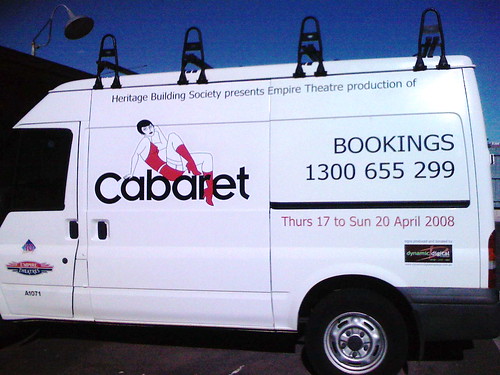
Saturday was a bonding day, a day when the acting company came together to work for the first time on the stage. The Director’s approach to this production has consistently been to point us towards the notion of the reality of the historical events surrounding this play, and the impact those events had upon the participants, willing or otherwise. By taking this approach he is focussing on the psychology of the characters … this is what makes them take the decisions they do and which will eventually leave the audience wondering, “What would I have done?”
So the first morning was about games playing, relaxing, getting to know one another and story telling. Simply getting up in the space and playing broke the ice for the company, gave everyone a voice and sense of the team. Oh yes, hugs were obligatory. Towards the end of the morning, we turned our attention to getting a sense of what it must have felt like to be part of a nation that was the hope of the future … Germany on the brink of 1930, and to find oneself as an individual on the inner and the outer of the power base. It was into workshop exercises designed to stir up the imaginative juices and get into what Stanislavski liked to call the ‘creative state.’ Continue reading “Rehearsals begin: workshops, complicité, and creativity”